
Why Psychological Thrillers Are So Addictive: The Psychology Behind Our Obsession
Have you ever picked up a psychological thriller intending to read just one chapter, only to realise hours have passed?

There is something uniquely compelling about these stories. They explore betrayal, manipulation, obsession, secrets, fear, and the parts of human behaviour we often prefer not to think about.
Yet we keep turning the pages.
We know these stories may make us uncomfortable. We know they may challenge our beliefs about people and morality.
But that is exactly why they are so difficult to put down.
So why are psychological thrillers so addictive?
The answer lies in the way these stories tap into some of our deepest human instincts: curiosity, fear, uncertainty, and our desire to understand what people are truly capable of.
Explore More Psychological Thriller Guides
If you love stories that explore deception, hidden motives, and the darker side of human behaviour, start with our guide to:
Why Psychological Thrillers Are So Addictive
Psychological thrillers are not addictive simply because they contain crime or suspense.
The most powerful stories create a psychological experience.
They make readers ask:
- Who can I trust?
- What is really happening?
- What am I missing?
- Would I have noticed the warning signs?
- What would I do in that situation?
A great psychological thriller creates a gap between what the reader knows and what they want to know.
That gap keeps pulling us forward.
The Psychology Behind The Thriller Addiction Loop
Many psychological thrillers follow a pattern that keeps our attention locked in:
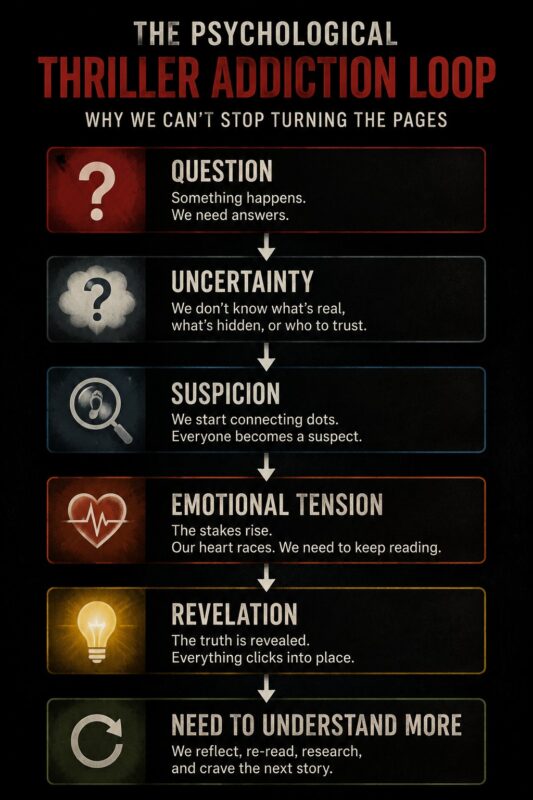
Question
↓
Uncertainty
↓
Suspicion
↓
Emotional tension
↓
Revelation
↓
Need to understand more
The brain naturally wants to resolve unanswered questions.
That is why readers often say:
“I couldn’t stop reading until I knew what happened.”
The story creates a problem your mind wants to solve.
Why We Love Psychological Thrillers That Make Us Question Everything
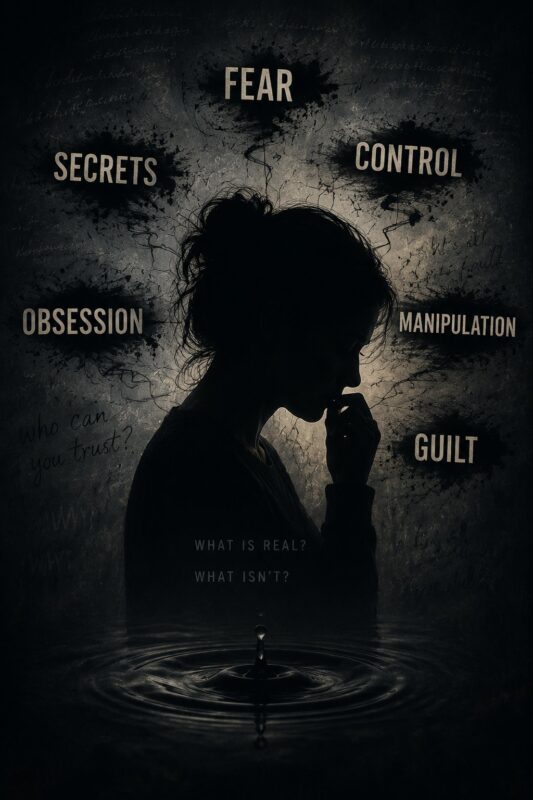
One of the biggest reasons people are drawn to psychological thrillers is uncertainty.
The best stories do not simply tell us what happened.
They make us question what we believe happened.
This is especially powerful in stories featuring:
- unreliable narrators
- hidden motivations
- conflicting perspectives
- characters who are not what they seem
A reader is not just watching the story unfold.
They become part of the investigation.
They are searching for clues.
They are trying to understand people.
Related Reading
If you enjoy stories where nothing is quite what it seems, explore:
👉 [Unreliable narrator books where you cannot trust what you are told]
Why People Are Fascinated By The Dark Side Of Human Behaviour
One of the most interesting things about psychological thrillers is that the real mystery is often not:
“Who committed the crime?”
It is:
“Why did someone do it?”
Humans have always been fascinated by behaviour.
We want to understand:
- why people lie
- why people manipulate others
- how ordinary people make harmful decisions
- what happens when people are pushed beyond their limits
This is also why true crime documentaries, criminal psychology discussions, and psychological thrillers attract such dedicated audiences.
The fascination is not necessarily with darkness itself.
It is with understanding it.
Why Psychological Thrillers Let Us Explore Fear Safely
A psychological thriller allows readers to experience danger without actually being in danger.
We can explore:
- betrayal
- fear
- obsession
- violence
- moral conflict
from a safe distance.
This is part of the appeal.
The human brain is naturally designed to notice threats.
Stories allow us to examine those threats without experiencing the real consequences.
It is the same reason people watch crime documentaries, survival stories, and mysteries.
We want to understand danger.
Why Twists And Endings Feel So Satisfying
A great twist does something powerful.
It changes the meaning of everything that came before.
Suddenly:
- a conversation has a different meaning
- a character’s behaviour makes sense
- clues become obvious in hindsight
The best psychological thrillers create the feeling:
“I should have seen it coming.”
That moment is incredibly satisfying because it rewards attention and curiosity.
Why The Best Psychological Thrillers Are Really About People
Although these books may involve crime, the strongest stories are rarely about the crime itself.
They are about people.
They explore:
- motivations
- relationships
- trauma
- choices
- consequences
The most memorable characters are not always good or bad.
They are complicated.
They make decisions.
They justify those decisions.
They reveal parts of human nature that are uncomfortable to examine.
And that complexity is what makes psychological thrillers stay with us.
Find Your Psychological Thriller Match
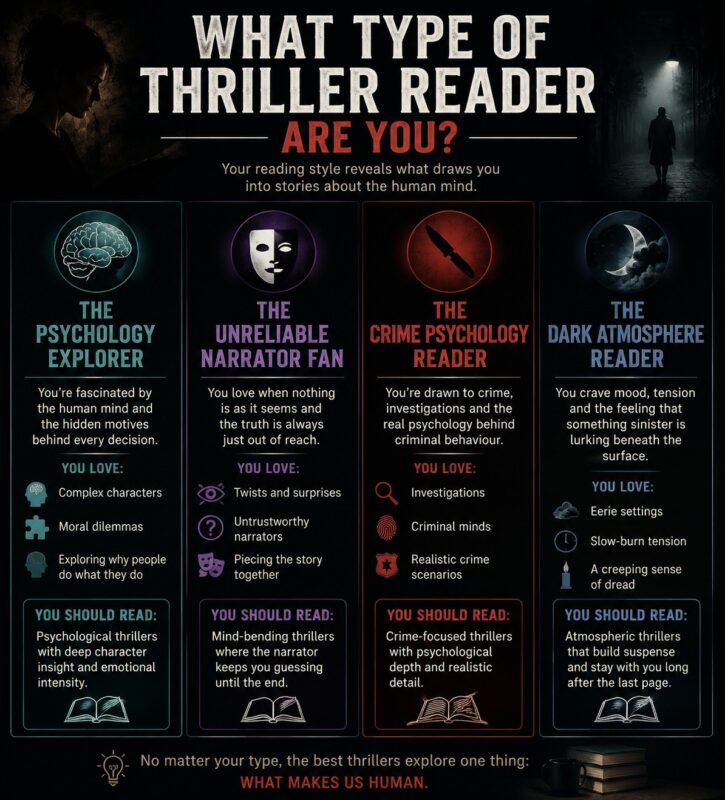
Not every thriller reader loves the same thing.
Some readers chase:
🧠 psychological depth
🎭 unreliable narrators
🔪 criminal behaviour
🌑 dark human stories
If you want help finding your next obsession, get our free guide:
Find Your Next Psychological Thriller Based On Your Reading Style
If You Love Psychological Thrillers About Human Behaviour, Discover Roger Bray
If the part of psychological thrillers that fascinates you most is not just the mystery, but the people behind it, you may enjoy Roger Bray’s novels.
Roger Bray draws on his experience as a former police officer to explore the decisions, pressures, and hidden motivations that shape human behaviour.
His psychological thrillers focus on questions like:
- What happens when people are pushed too far?
- How do ordinary decisions become life-changing?
- What drives someone towards destructive choices?
For readers who enjoy psychological stories grounded in believable human behaviour, Roger Bray offers a different perspective on crime fiction.
👉 Explore Roger Bray psychological thrillers
Final Thoughts: Why Psychological Thrillers Stay With Us
The reason psychological thrillers are so addictive is simple:
They do not just entertain us.
They make us think.
They challenge our assumptions about people.
They explore the uncomfortable questions we often avoid.
And long after the final page, they leave us wondering:
“What would I have done?”
That is the power of psychological storytelling.
Continue Exploring Psychological Thrillers
- Books Like The Silent Patient: Psychological Thrillers You Won’t Be Able to Put Down
- Books Like Gone Girl: Best Psychological Thrillers About Betrayal & Lies
- [Dark Psychological Thrillers You Can’t Put Down]
- [Psychological Thrillers About Human Behaviour]
FAQ SECTION about psychological thrillers
Why are psychological thrillers so addictive?
Psychological thrillers are addictive because they combine curiosity, suspense, uncertainty, and emotional tension. They make readers want to understand hidden motives, uncover secrets, and discover what happens next.
Why do people enjoy dark psychological stories?
People enjoy dark psychological stories because they allow us to explore fear, danger, and human behaviour from a safe distance. They help us understand difficult emotions and complex decisions without experiencing real-world consequences.
Why do psychological thrillers stay in your mind?
Psychological thrillers often stay with readers because they challenge assumptions, create emotional reactions, and leave unresolved questions that the brain continues processing after the story ends.
Why do people like crime fiction and true crime stories?
Many people are fascinated by crime fiction because it explores human behaviour, morality, justice, and the reasons behind people’s actions.
What makes a psychological thriller different from other thrillers?
Psychological thrillers focus heavily on characters, motivations, perception, and emotional tension. Instead of relying only on action, they explore the psychology behind decisions and behaviour.
Are psychological thrillers based on real psychology?
Many psychological thrillers are inspired by real human emotions, relationships, motivations, and behavioural patterns, although fictional stories often exaggerate situations for dramatic effect.
Find your next psychological thriller
Not Sure Where to Start?
Love dark psychological thrillers but not sure what to read next? Answer three quick questions and discover the Roger Bray thriller that best matches your reading style.
01
What draws you into a thriller first?
02
Which reading experience sounds most compelling?
03
What should stay with you after the final page?
Your recommended thriller
Start with Hidden
A tense psychological thriller for readers who love buried secrets, unreliable perspectives and revelations that change everything.
Buy My Recommended ThrillerPrefer to browse them all? Explore the complete Roger Bray collection →